Environment & Energy
Showing Original Post only (View all)
Electric Power Reliability, Energy Burdens, and Climate Change Beliefs in the United States [View all]
The paper I will very briefly discuss in this post is this one: Electric Power Reliability, Energy Burdens, and Climate Change Beliefs in the United States Hang Shuai, Chien-Fei Chen, Benjamin Sovacool, Suzanna Sumkhuu, and Zhenglai Shen Environmental Science & Technology 2025 59 (50), 27206-27221.
Before commenting further, I hold a low opinion of one of the authors of this otherwise useful and interesting paper, the antinuke Benjamin Sovacool, who I hold as a member of an unfortunate cabal of academics as well as prominent nonacademic "scientists" (i.e. Joe Romm and Ed Lyman) who help drive extreme global heating by raising specious objections to nuclear energy, which I regard as the only sustainable and acceptable tool to address the collapse of the planetary atmosphere.
As for the word "belief," physical realities are not a function of human belief. The role of evolution, now understood not only on a taxonomy and fossil basis is well established on a mechanistic molecular level, and is a true explanation of the origin of species whether one believes the Biblical account of the world being created in 7 days (before the concept of a "day" existed) or not.
The reality that extreme global heating is driven by human actions is also a fact is whether some Trumper in Indiana "believes" that or not.
The laws of relativity were not affected at all by the rejection of it as "Jewish Physics" by Nazi Nobel Laureate Johannes Stark.
The fact that fossil fuels kill people in vastly greater numbers daily than nuclear power ever has during its entire 70 years history, and that trillions of dollars thrown at so called "renewable energy" has had no effect on extreme global heating does not depend on whether Benjamin Sovacool believes nuclear energy is "too dangerous" or "too expensive." These things are facts not subject to belief.
Nevertheless, my barely hidden contempt for Sovacool notwithstanding, I fully credit this paper for pointing out what we at DU know of the Republican party: They only care about an issue, or even acknowledge an issue when it effects them personally.
Sovacool is a social scientist, not a physical scientist, and thus his survey tools are probably have some validity.
From the text of the paper, which explains, in a realistic and mechanistic way (despite my immediate bias it was going to be a nonsense paper) the connection between belief and reality:
A growing literature shows that direct exposure to climate hazards shapes social beliefs, policy preferences, and support for low-carbon technologies. (9,46,47) Personal experience with extreme weather and natural disasters tends to heighten concern about climate action or increase support for progressive energy and climate policies. (48−51) This pattern is evident even among minority groups and Indigenous communities. However, the literature has focused more broadly on hazard exposure than specifically on infrastructure disruptions.
Studies centered explicitly on power outages are comparatively limited. For example, (28) researchers examined California’s 2019 public safety power shut-offs and found effects on behavioral intentions, climate attitudes, utility perceptions (i.e., attitudes toward utilities), and government trust (i.e., politician approval ratings). Yet, most existing studies rely on aggregate national survey data (41) or single-state cases, overlooking spatially explicit factors such as local outage experience that may shape belief formation. At the national scale, the U.S. Department of Energy (DOE)’s The Environment for Analysis of Geo-Located Energy Information (EAGLE-I) data set provides county-level outage data from 2014 to 2023 and is widely used in engineering analyses of grid reliability. (52,53) To date, applications have largely focused on physical infrastructure resilience with far less attention to the social or perceptual dimensions of disruption...
"Expected," the word I highlighted is probably too loose a word, but perhaps my bias is making me too picayune about Benny's work here. From my perspective this is observed, not "expected." The ongoing collapse of the planetary atmosphere expressed as extreme weather is not something that's going to happen in the future. It is observed now.
The authors also define the "Energy Burden," the cost of energy, as a mechanistic issue, specifically referring to air conditioning, which is now necessary at times for human survival.
The problem of high EBs is exacerbated by extreme weather. Households have to operate their air conditioners for longer periods of time during heat waves and face greater heating needs during cold spells. Additionally, severe storms have the potential to disrupt the power supply, resulting in price increases or outages...
Despite the dishonest rhetoric which Sovacool and many others hand out that wind and solar are "cheap" - ignoring the very real and profound but hidden economic and environmental costs of fossil fuel redundancy, unreliability, mass and land requirements and short infrastructure lifetimes - the reality is that so called "renewable energy" leads to high electricity prices. The highest residential electricity prices in the United States outside of Hawaii , are in wind and solar "heaven," California, where the average statewide residential price reported by the EIA is 31.97 cents per kWh compared to a national average (including Hawaii) of 16.48 cents per kWh. (cf. Table 5 "T5a" : EIA Electric Sales, Revenue, and Average Price, accessed 12/31/2025)
(One is invited to compare electricity prices in France compared to Germany.)
I would suggest that Benny look at results, not cherry picked theory.
Anyway, the paper under discussion is not a bad one; indeed it's a good one as social science papers go.
Some figures from the text:
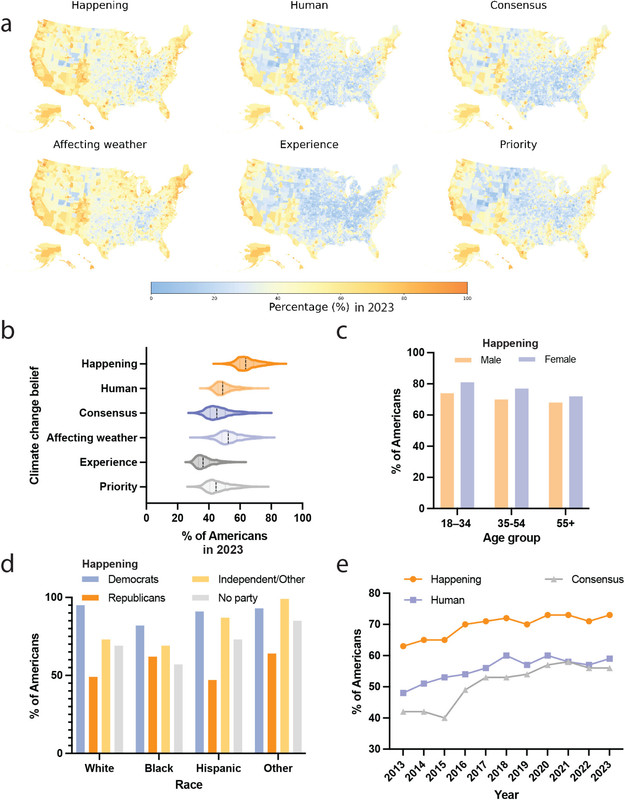
The caption:
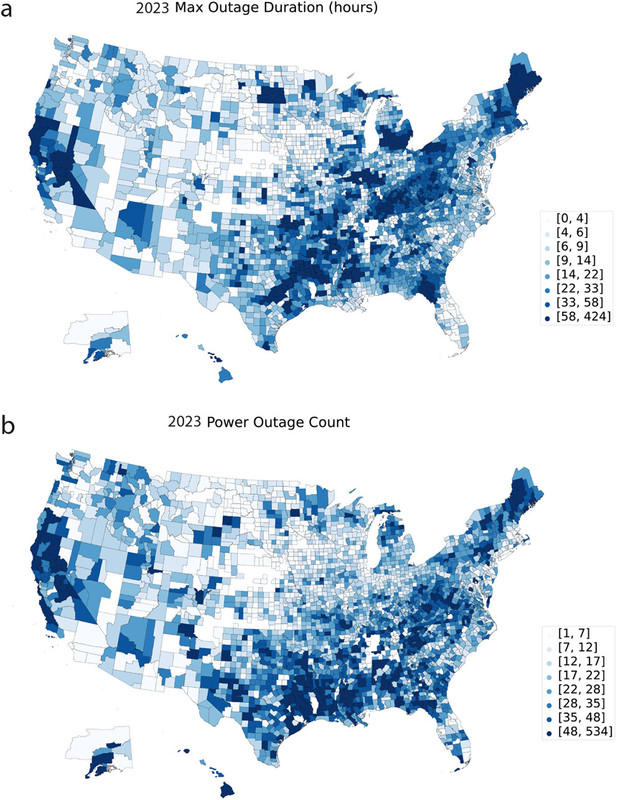
The caption:
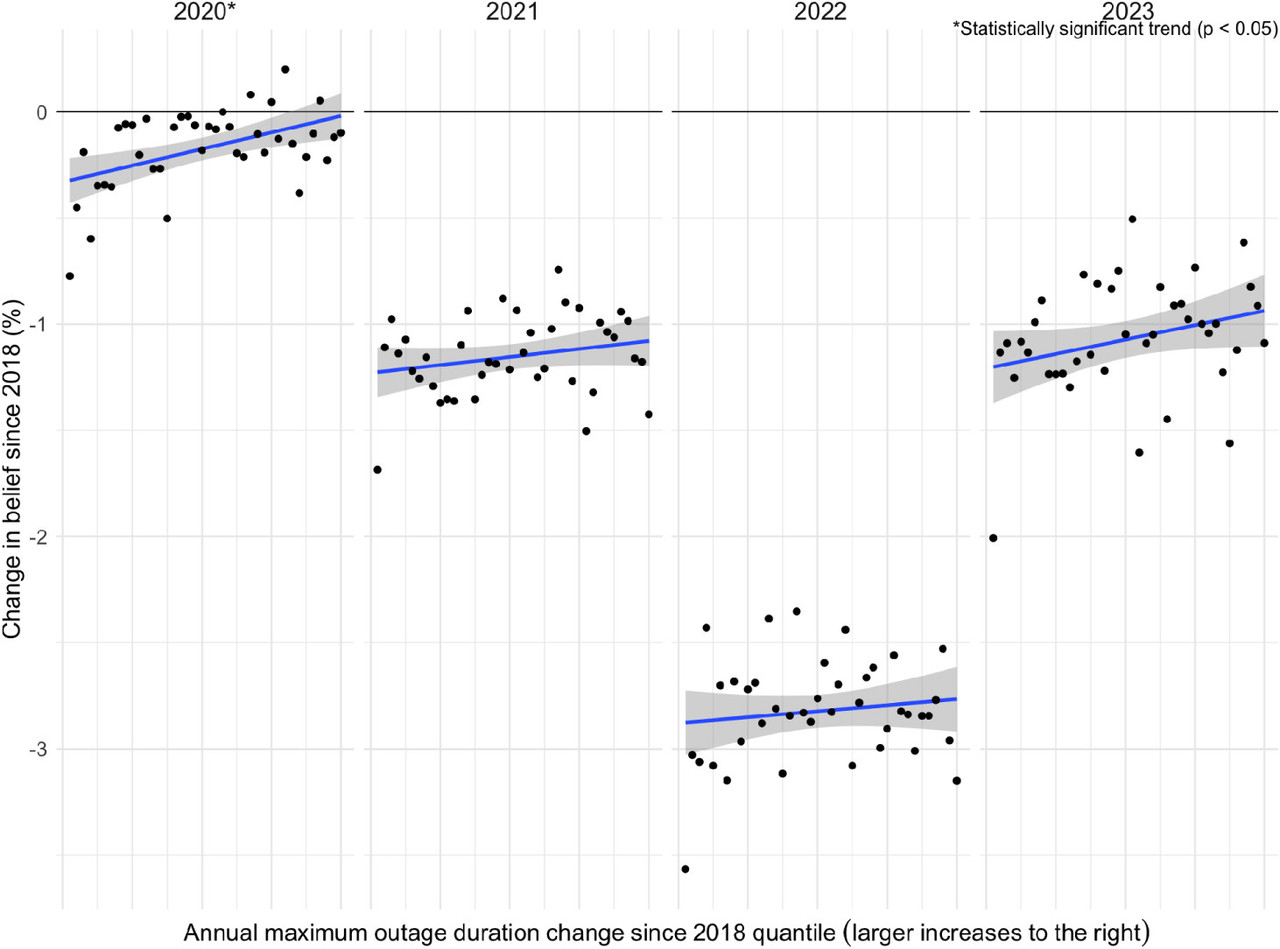
The caption:
The opening sentence of the conclusion to the paper:
A comment on the part of this sentence I have bolded: It is widely believed, but demonstrably untrue, that so called "renewable energy" represents a solution to address climate change. The purpose of "renewable energy" hype was never about addressing the use of fossil fuels. On the contrary it was, is and always will be about attacking nuclear energy, nuclear energy, as I often point out by the use of data, being the only realistic approach to addressing climate change. Thus the trillions squandered in the last decade on solar and wind energy are not making things get better, arguably (I would say "definitively" ) they are making things get worse, faster, as any look at the numbers for the concentration of the dangerous fossil fuel waste carbon dioxide in the atmosphere clearly show. The "Energy Burden" - the high costs associated with the useless reactionary belief that so called "renewable energy" has something to do with climate change - leads to counter productive "beliefs," although belief has nothing to do with, and often conflicts with, reality.
The disturbing, and perhaps psychologically inevitable, thing is that the acceptance of reality - in this case that extreme global heating has anthropogenic causes - is a function of personal experience, which may or may not be correctly interpreted on an individual basis. A different, but perhaps related examples were those we saw during Covid where people refused vaccines and went to their deaths pleading, even screaming, to be treated with the cattle de-wormer Ivermectin.
The planet is in a world of shit.
I wish you the happiest of New Years.
 = new reply since forum marked as read
Highlight:
NoneDon't highlight anything
5 newestHighlight 5 most recent replies
= new reply since forum marked as read
Highlight:
NoneDon't highlight anything
5 newestHighlight 5 most recent replies