Of the six species of birds and mammals that Steller discovered during the voyage, two are extinct (Steller's sea cow and the spectacled cormorant) and three are near threatened and vulnerable (Steller sea lion, Steller's eider and Steller's sea eagle). The sea cow, in particular, a massive northern relative of the dugong, lasted only 27 years after Steller discovered and named it. The sea cow had a limited population that quickly became victim of overhunting by the Russian crews that followed in Bering's wake.
Steller's jay is one of the few species named after Steller that is not currently listed as endangered.[5] In his brief encounter with the bird, Steller was able to deduce that the jay was kin to the American blue jay, a fact which seemed proof that Alaska was indeed part of North America.
Despite the hardships the crew endured, Steller studied the flora, fauna, and topography of the island in great detail. Of particular note were the only detailed behavioral and anatomical observations of Steller's sea cow, a large sirenian mammal that once ranged across the Northern Pacific during the Ice Ages, but whose surviving relict population was confined to the shallow kelp beds around the Commander Islands, and which was driven to extinction within 30 years of discovery by Europeans.
Based on these and other observations, Steller later wrote
De Bestiis Marinis ('On the Beasts of the Sea'), describing the fauna of the island, including the northern fur seal, the sea otter, Steller sea lion, Steller's sea cow, Steller's eider and the spectacled cormorant. Steller claimed the only recorded sighting of the marine cryptid Steller's sea ape.
https://en.wikipedia.org/wiki/Georg_Wilhelm_StellerSteller had his own problems with MAHA:
Although Steller tried to treat the crew's growing scurvy epidemic with leaves and berries he had gathered, officers scorned his proposal.[2] Steller and his assistant were some of the very few who did not suffer from the ailment. On the return journey, with only 12 members of the crew able to move and the rigging rapidly failing, the expedition was shipwrecked on what later became known as Bering Island. Almost half of the crew had perished from scurvy during the voyage.[2] Steller nursed the survivors, including Bering, but he could not be saved and died.
Native Americans in the PNW knew that certain herbs had antiscorbutic (scurvy-fighting) factors; these have since been proven to contain vitamin C (ascorbic acid; "ascorbic" from Latin for "no scurvy" ). It's not clear to me if Steller ever met NAs, but he might have learned this from Siberian natives who did have some communications with Alaskan natives.
In the winter of 1535-1536, the three ships of French explorer Jacques Cartier, the father of New France, were frozen in the thick ice on the St. Lawrence river near Stadacona, now known as the city of Québec. His crew, surviving only on their remaining rations and wild game, were rapidly falling victim to scurvy, and twenty-five had died. On learning of their plight, the local Iroquois chief arranged to have branches of an evergreen tree called annedda brought to them, with instructions on how to administer it. A desperate Cartier complied, and within days, his crew had recovered (Biggar 1924). He recounted:
... had all the doctors of Louvain and Montpellier been there, with all the drugs of Alexandria, they could not have done so much in a year as did this tree in eight days...
The Voyages of Jacques Cartier, 1536
Medicinal Use of Forest Trees and Shrubs by Indigenous People of Northeastern North America
https://www.fao.org/4/xii/0191-a2.htm200 years later, most European doctors, navies, and sailors still did not know how to prevent scurvy.

Steller is a greatly underappreciated historical figure; he died young, suffering from a fever and left outdoors in a sleigh while his Russian guards spent hours drinking in an inn.
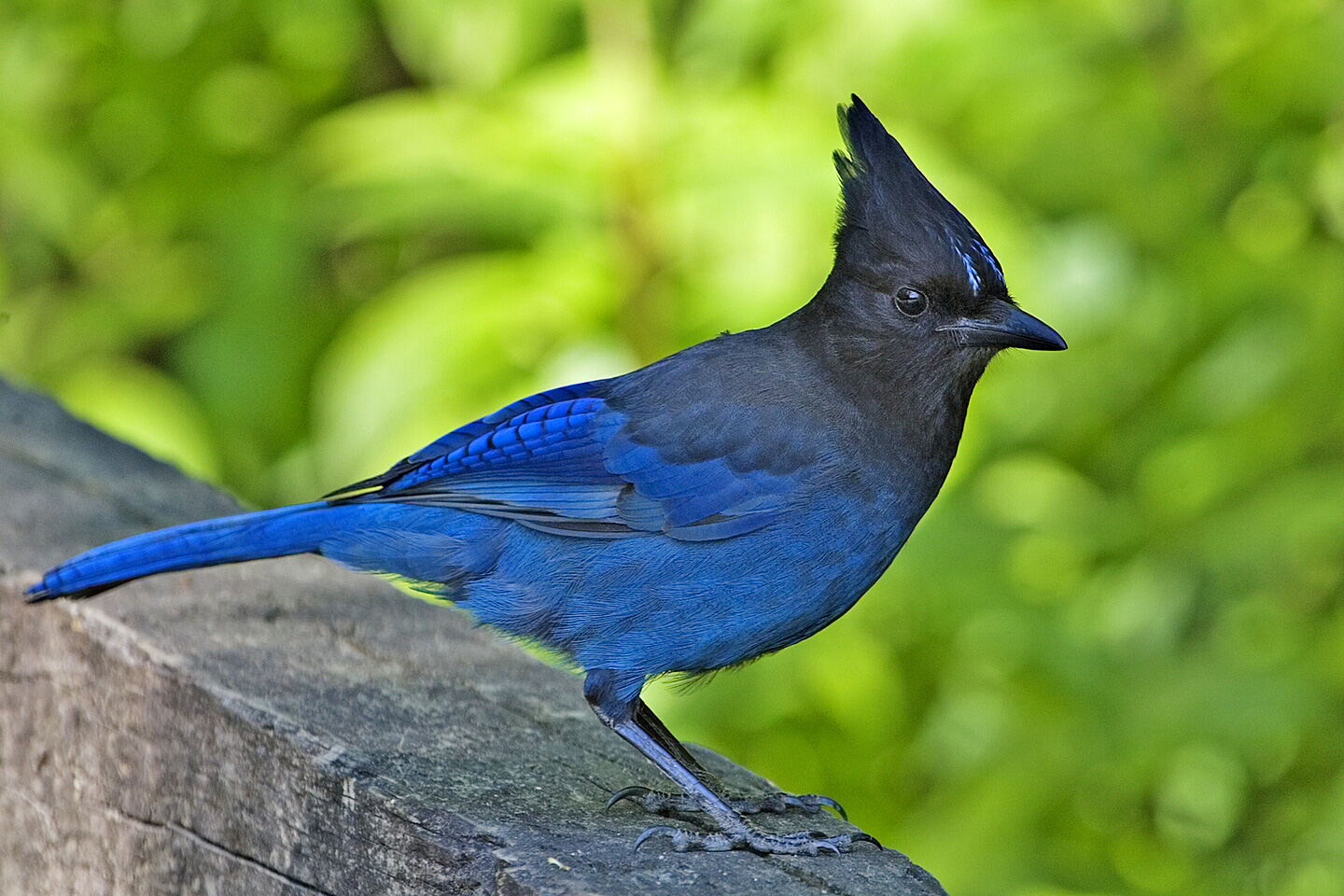
Steller's Jay lets you know you are west of the Mississippi River; the Eastern Blue Jay does the same for the East.

 = new reply since forum marked as read