Excerpt...
Perhaps the most memorable of these roles came during the Reagan administration, when Rumsfeld was named special presidential envoy to the Middle East. According to the Washington Post and others, Rumsfeld was a major proponent of the Reagan administration's support of Iraq and its dictator Saddam Hussein.
As a conciliatory gesture, the U.S. removed Iraq from its list of state sponsors of terrorism in 1982, paving the way for Rumsfeld to visit Baghdad in 1983, about the midpoint of the decade-long Iran-Iraq war.
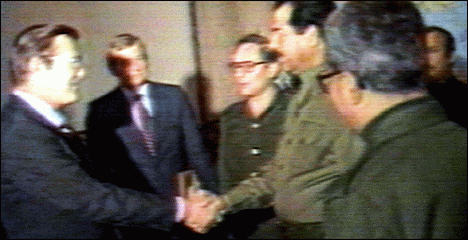
At the time, intelligence reports indicated the Iraqis were using illegal chemical weapons against Iran "almost daily." During several trips to Iraq, Rumsfeld told government officials that the U.S. would consider an Iraqi loss to Iran a major strategic defeat. In a personal meeting with Saddam Hussein in December 1983, Rumsfeld told the Butcher of Baghdad that the U.S. wanted to restore full diplomatic relations with Iraq.
In 2002, Rumsfeld tried to put a gloss on this meeting by claiming that he warned Hussein against using banned weapons, but that claim was unsupported by the State Department's notes on the meeting.
As a result of the openings created by Rumsfeld's diplomatic triumphs, U.S. companies were recruited and encouraged, both covertly and overtly, to ship poisonous chemicals and biological agents to Iraq, by the administrations of both Reagan and George Bush Sr.. Care packages to Saddam included sample strains of anthrax and bubonic plague, and components which would be used to develop nerve poisons like sarin gas and ricin.
Source:
https://gwern.net/doc/rotten.com/library/bio/usa/donald-rumsfeld/index.html