Welcome to DU!
The truly grassroots left-of-center political community where regular people, not algorithms, drive the discussions and set the standards.
Join the community:
Create a free account
Support DU (and get rid of ads!):
Become a Star Member
Latest Breaking News
Editorials & Other Articles
General Discussion
The DU Lounge
All Forums
Issue Forums
Culture Forums
Alliance Forums
Region Forums
Support Forums
Help & Search
General Discussion
Related: Editorials & Other Articles, Issue Forums, Alliance Forums, Region Forums
April 6, 1712, In Labor History: One Of The First Slave Revolts, In New York City
https://www.wonkette.com/p/april-6-1712-in-labor-history-oneErik Loomis
Some amazing history I knew nothing about even though I received my grade schooling in New York.
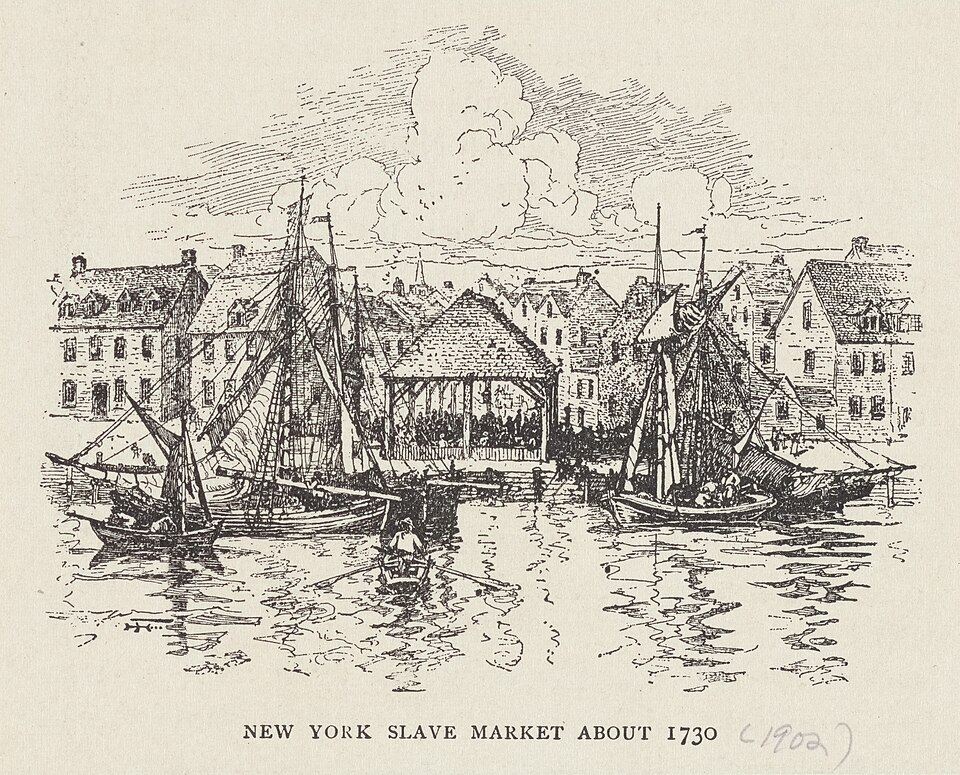
On April 6, 1712, a group of enslaved people gathered in Manhattan, setting fire to a building on Maiden Lane, near Broadway. When white people gathered to put out the fire, the enslaved people attacked with hatchets, guns, and swords. This brief incident of violence became known as the New York Slave Revolt of 1712, one of the earliest slave revolts in what became the United States.
New York was a major center for the slave trade, and remained so until after the American Revolution. The Dutch had brought enslaved African people to New Amsterdam, but day-to-day, they had a relatively high amount of freedom, at least compared to other enslaved people in the Americas. In fact, under the Dutch, such people had some legal rights, including the right to marry and the right to own property.
When the English took the small colony over in 1664 and renamed it New York, those rights started to disappear. Moreover, slavery became a bigger part of the city under the English, with the Royal African Company importing enough enslaved people that the city built a slave market near what is today Wall Street.
By 1700, about 20 percent of New York was made up of enslaved people. Slavery was absolutely central to life in New York, something that is largely unknown today. Northerners like to think slavery was a southern thing, but not only were northern ship owners and sailors largely responsible for bringing enslaved people to the American colonies and then the United States, and not only were many northern fortunes for families and institutions that are still wealthy today founded on ripping enslaved people out of their homes, but there were also just generally a whole lot of enslaved people in the North, especially in New York.
. . .
New York was a major center for the slave trade, and remained so until after the American Revolution. The Dutch had brought enslaved African people to New Amsterdam, but day-to-day, they had a relatively high amount of freedom, at least compared to other enslaved people in the Americas. In fact, under the Dutch, such people had some legal rights, including the right to marry and the right to own property.
When the English took the small colony over in 1664 and renamed it New York, those rights started to disappear. Moreover, slavery became a bigger part of the city under the English, with the Royal African Company importing enough enslaved people that the city built a slave market near what is today Wall Street.
By 1700, about 20 percent of New York was made up of enslaved people. Slavery was absolutely central to life in New York, something that is largely unknown today. Northerners like to think slavery was a southern thing, but not only were northern ship owners and sailors largely responsible for bringing enslaved people to the American colonies and then the United States, and not only were many northern fortunes for families and institutions that are still wealthy today founded on ripping enslaved people out of their homes, but there were also just generally a whole lot of enslaved people in the North, especially in New York.
. . .
2 replies
 = new reply since forum marked as read
Highlight:
NoneDon't highlight anything
5 newestHighlight 5 most recent replies
= new reply since forum marked as read
Highlight:
NoneDon't highlight anything
5 newestHighlight 5 most recent replies
= new reply since forum marked as read
Highlight:
NoneDon't highlight anything
5 newestHighlight 5 most recent replies
April 6, 1712, In Labor History: One Of The First Slave Revolts, In New York City (Original Post)
erronis
Monday
OP

bucolic_frolic
(55,273 posts)1. I read somewhere slavery was first in the colonies on Long Island.
and it still has redneck roots in some places.
On Edit: "founded on ripping enslaved people out of their homes. "
Yes, and using slaves in their businesses (even in colonial Philadelphia). And clubbing wildlife to death in the northeast and midwest (John Jacob Astor). And grabbing territory from indigenous peoples. Or high prices in frontier general stores (Andrew Jackson). Some might have even opened brothels in the Klondike!

cachukis
(3,976 posts)2. Hartford Courant did a great series in 2005.
Wrote a book.